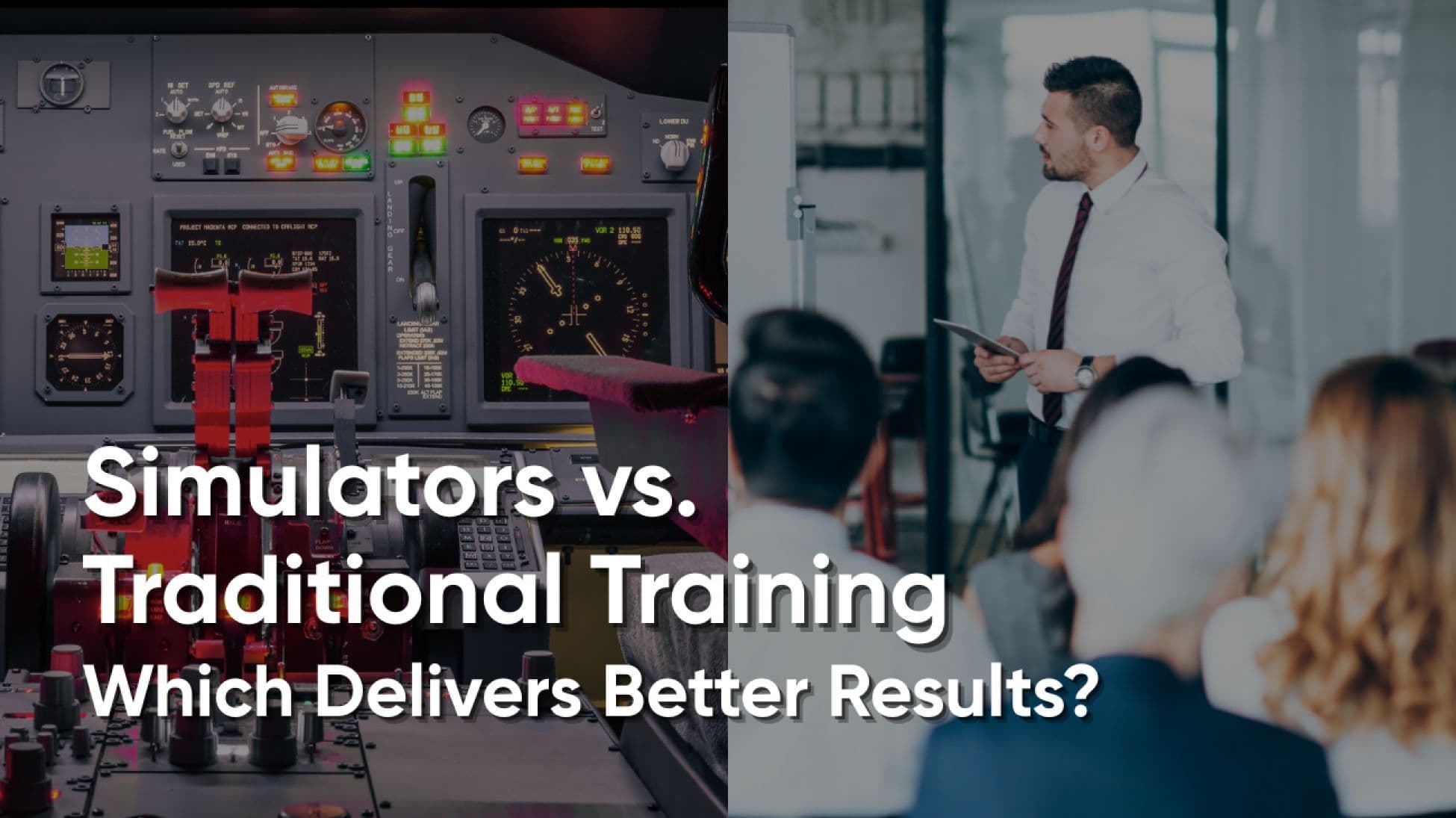
Training has always been the foundation of excellence in the aviation and maritime industries. For decades, classroom sessions, manuals, and real-world vessel or aircraft experience defined what it meant to “train.” But with the rapid advancement of technology, simulation-based learning has transformed how professionals gain critical skills, safely, efficiently, and effectively.
The question now isn’t whether simulation should be part of training, but whether simulators outperform traditional training in preparing the workforce for modern challenges.
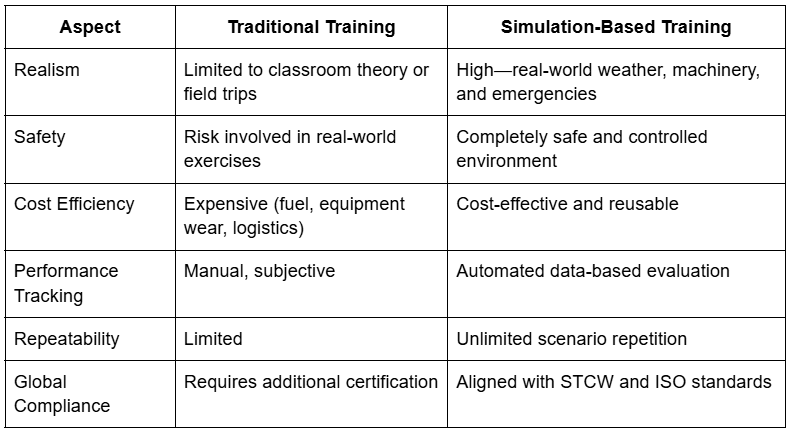
Traditional training methods rely heavily on theory, textbooks and are limited to on-the-job practice. While these approaches build fundamental understanding, they often fall short in replicating real-world conditions. For example, a trainee pilot can read about turbulence or system failure, but experiencing and reacting to it requires exposure that’s both rare and risky in real aircraft.
Flight simulators and maritime training simulators, on the other hand, recreate authentic scenarios, from takeoffs and emergency landings to storm navigation and engine failures. They allow trainees to apply theory in a realistic environment without the risks or expenses of operating actual equipment.
The result? A safer, more engaging, and measurable learning experience.
One of the greatest advantages of simulators is safety. In high-stakes industries like aviation and maritime, real-world training involves substantial risks. Engine fires, steering malfunctions, or collision scenarios cannot be practiced safely at sea or in the sky.
Simulation eliminates that danger. Trainees can experience emergencies firsthand, test decision-making skills, and learn from mistakes, all within a controlled, risk-free environment.
Operating aircraft or ships for training purposes is expensive. Fuel, maintenance, crew costs, and wear-and-tear add up quickly. Simulation-based learning drastically reduces these expenses.
Once a simulator is installed, it can run multiple training sessions daily without downtime, fuel consumption, or weather restrictions. For organizations, this translates into long-term savings and consistent training quality.
Traditional training often lacks repeatability. Once a real-world scenario passes, it’s gone. Simulators, however, can replicate the same conditions repeatedly until the trainee achieves mastery.
For instance, maritime maintenance simulators enable engineers to repeatedly practice system repairs and fault diagnostics. Similarly, flight simulators allow pilots to train under diverse conditions, from severe crosswinds to low-visibility approaches, until proficiency is achieved.
Repetition in realistic settings ensures that responses become instinctive rather than theoretical.
Both aviation and maritime sectors are governed by strict international standards like STCW, IEC, ISO, DNV, and IBAO. Simulation technology is recognized globally as an approved and often preferred method of training under these frameworks.
By integrating aviation training solutions and maritime simulators, organizations not only meet but often exceed regulatory expectations. The ability to assess, record, and verify trainee performance adds an extra layer of accountability that traditional methods lack.
In traditional classrooms, evaluating performance is subjective, often limited to written tests or instructor feedback. Simulation-based training introduces objective metrics.
Modern simulators record every movement, decision, and response. Instructors can review data, identify weak points, and personalize training plans for improvement. This data-driven insight enhances learning outcomes and ensures skill retention.
The aviation and maritime industries are undergoing rapid transformation. From digital navigation to eco-friendly vessel design, professionals need to stay ahead of technological advancements.
Simulation-based platforms evolve with these changes. At Yontem Teknoloji, our advanced flight and maritime training simulators integrate modern interfaces, AI-driven assessment systems, and immersive visuals, ensuring trainees experience the same technologies they’ll encounter in the field.
Traditional training methods simply cannot replicate such real-time adaptability.
While simulators provide a superior technical experience, they don’t eliminate the human element of learning. Mentorship, instructor guidance, and real-world exposure remain essential. The ideal approach combines simulation with practical experience, bridging theoretical understanding and operational execution.
This hybrid model ensures that trainees not only understand the “how” but also the “why” behind every decision.
At Yontem Teknoloji, we design and deliver cutting-edge simulation training solutions that empower aviation and maritime professionals worldwide. Our flight simulators and maritime training simulators are built to meet international standards, ensuring accuracy, safety, and efficiency.
By combining innovation with real-world expertise, Yontem helps academies, training centers, and institutions develop skilled professionals capable of navigating the challenges of modern aviation and maritime industries.
The debate between simulators and traditional training isn’t about replacement, it’s about evolution. Simulation-based training enhances traditional methods, making them safer, smarter, and more measurable.
As industries continue to modernize, simulators will remain the backbone of future-ready education. And with technology partners like Yontem Teknoloji, institutions can confidently prepare their trainees for real-world excellence, without compromise.
Yontem Teknoloji: Innovating Simulators and Laboratory Solutions
Company
Product