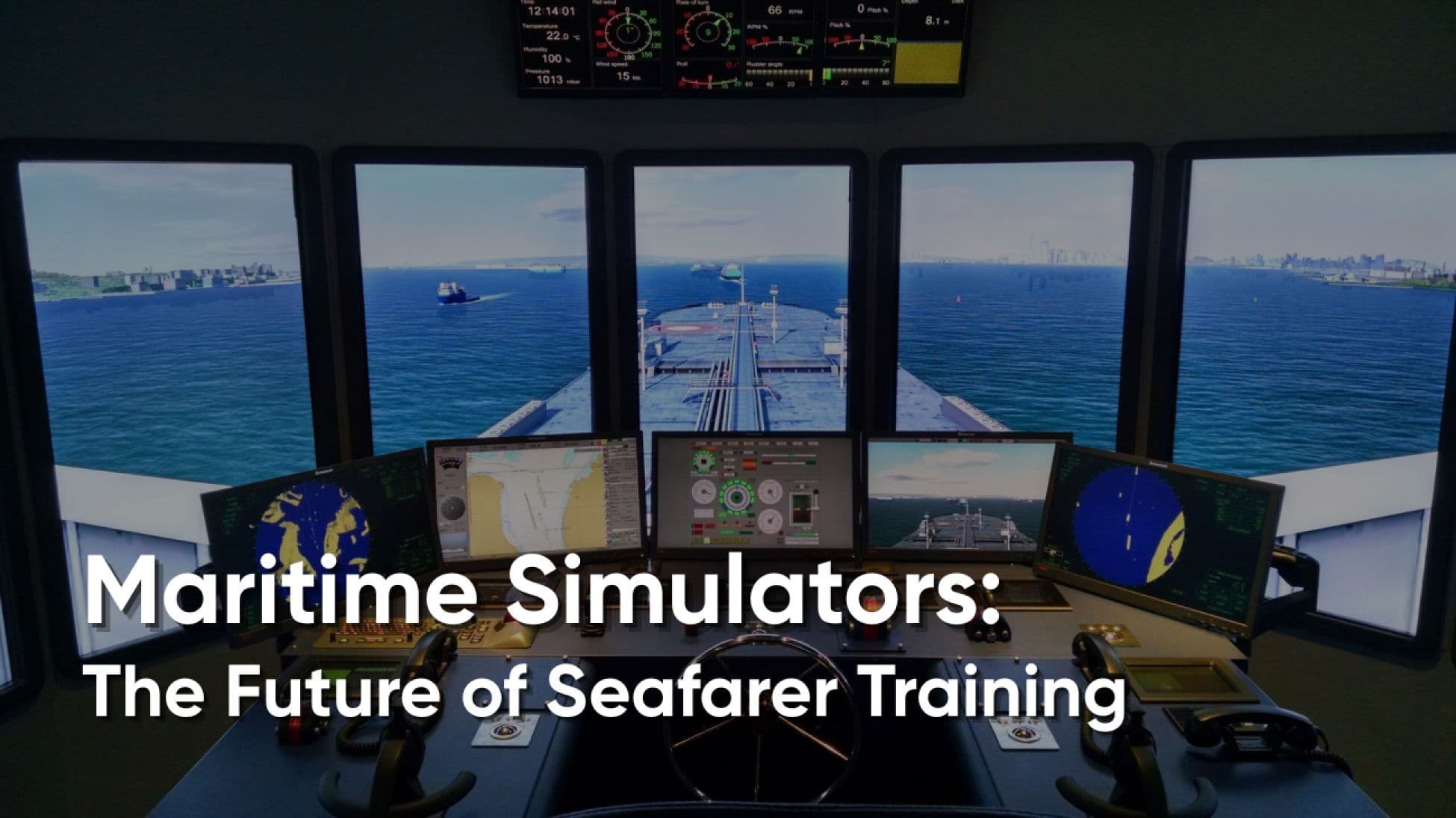
In today’s rapidly evolving maritime industry, safety, efficiency, and skill development are more important than ever. Ships are becoming increasingly sophisticated, global trade is more interconnected, and international safety regulations are constantly being updated. To meet these challenges, maritime academies and shipping companies are turning to maritime training simulators as a reliable, effective, and cost-efficient solution for preparing the next generation of seafarers.
The oceans remain one of the world’s most unpredictable environments. Seafarers must be prepared to face extreme weather conditions, mechanical breakdowns, navigation hazards, and emergencies. Traditional classroom training and onboard apprenticeships have long been the backbone of maritime education, but they are not always enough.
This is where maritime training simulators come in. By replicating real-world scenarios in a controlled environment, simulators allow cadets and experienced crew members to practice critical skills without the risks or costs associated with actual vessels.
A key reason maritime academies invest in simulators is to comply with international training standards such as the STCW (Standards of Training, Certification, and Watchkeeping for Seafarers). Modules like STCW security awareness and basic safety training for seafarers can be effectively reinforced through simulation exercises. Instead of passively learning theory, trainees actively engage in realistic drills, improving both retention and readiness.
Modern simulators are highly versatile, catering to different aspects of maritime operations. They are not limited to navigation but extend into engineering, cargo handling, and emergency response.
Here’s a quick overview of common simulator types:
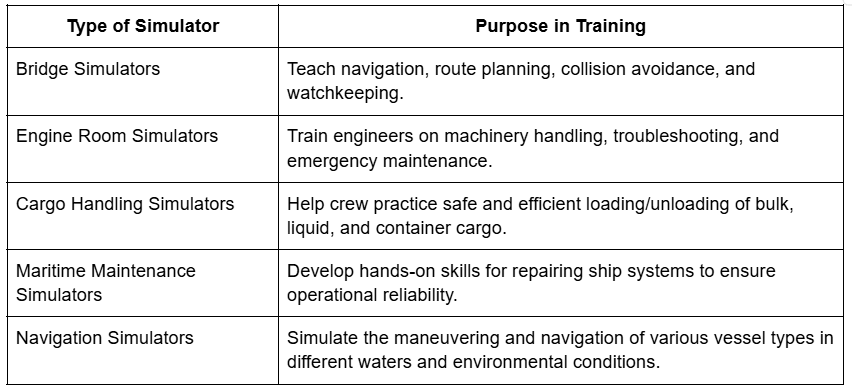
By integrating these simulators into training programs, institutions ensure comprehensive skill development across navigation, technical, and safety disciplines.
Safety remains the cornerstone of seafarer training. Modules like STCW security awareness ensure crew are prepared for modern threats, including piracy and terrorism. When combined with simulators, these lessons become more impactful. For example, a security drill in a simulator can teach cadets how to identify suspicious activities, implement safety protocols, and coordinate responses under pressure.
Similarly, basic safety training for seafarers, covering firefighting, first aid, survival techniques, and personal safety, becomes more immersive when practiced in a simulated environment. Trainees don’t just read about emergency procedures; they live them in a realistic, controlled setting.
The maritime industry is under constant transformation, driven by digitalization, automation, and environmental regulations. Tomorrow’s seafarers will need to adapt to smart ships, green technologies, and advanced navigation systems. Maritime training simulators are already incorporating elements of virtual reality (VR) and artificial intelligence (AI) to replicate these future scenarios.
By exposing cadets to next-generation technology during their training, academies prepare them for the ships they will encounter tomorrow, not just the ones of today.
The ocean may always remain unpredictable, but the way we prepare seafarers doesn’t have to. Maritime training simulators provide the perfect balance between theory and practice, offering a safe, cost-effective, and highly realistic approach to skill development. From reinforcing STCW security awareness to building hands-on skills with maritime maintenance simulators, these tools are shaping a generation of seafarers who are better equipped to handle the challenges of the modern maritime industry.
As global trade continues to expand and safety regulations grow stricter, the role of simulators will only increase. For academies, shipping companies, and governments alike, investing in simulation is not just about compliance; it’s about navigating the future with confidence.
👉 At Yontem Teknoloji, we specialize in delivering advanced maritime training solutions that align with global standards and prepare crews for tomorrow’s challenges.
Reach out to explore how our simulators can enhance your training programs.

Yontem Teknoloji: Innovating Simulators and Laboratory Solutions
Company
Product