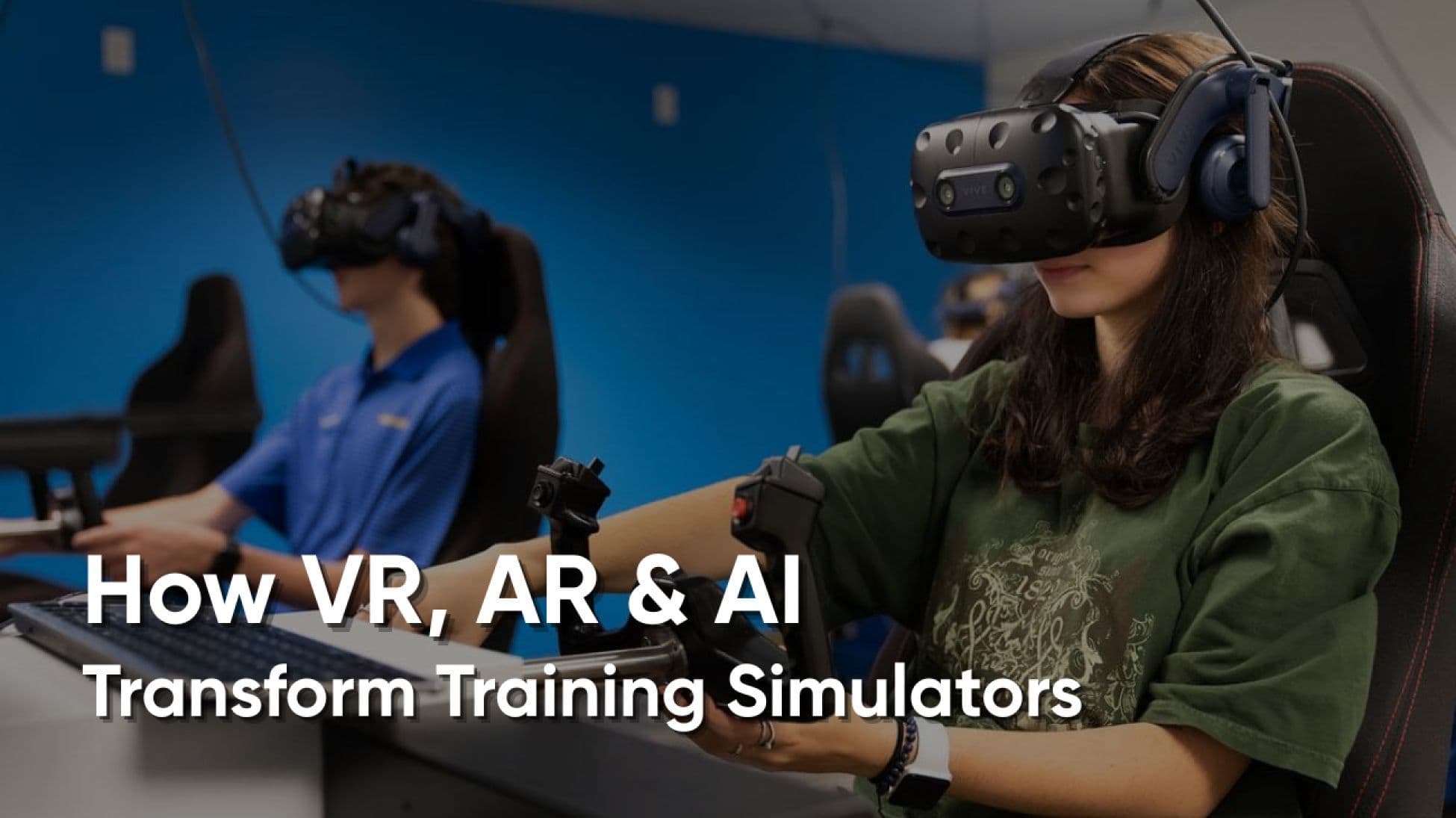
The world of aviation and maritime training is evolving at an unprecedented pace. As technology advances, traditional learning methods are being replaced by immersive, data-driven, and highly interactive systems. The integration of Virtual Reality (VR), Augmented Reality (AR), and Artificial Intelligence (AI) into training simulators has opened new frontiers in safety, efficiency, and realism.
For organizations and training institutions globally, these technologies are not just modern tools; they are transforming how pilots, seafarers, and engineers prepare for real-world challenges.
For decades, flight simulators and maritime training simulators have played a crucial role in skill development. They allowed trainees to experience real-world operations in controlled environments, significantly improving safety and cost efficiency. But as expectations and technologies evolve, so must the simulators themselves.
Enter VR, AR, and AI, three technologies revolutionizing the way professionals train. Together, they create experiences that are interactive, adaptive, and incredibly lifelike.
Virtual Reality places trainees inside fully simulated 3D environments that mimic actual aircraft cockpits or ship bridges. Using headsets and motion sensors, trainees experience the same visual, auditory, and spatial cues they would encounter in real operations.
In aviation, VR flight simulators recreate everything, from turbulence and crosswinds to cockpit alerts, allowing pilots to react instinctively. For maritime learners, VR-based marine simulator training helps navigate storms, execute docking maneuvers, and manage emergencies, all without real-world risks.
This realism fosters confidence; trainees can make mistakes, analyze outcomes, and refine their skills repeatedly without endangering lives or assets.
While VR immerses trainees in virtual worlds, Augmented Reality blends digital elements into real-world settings. Through AR headsets or tablets, trainees can visualize machinery components, navigation systems, or maintenance workflows overlaid with real equipment.
In aviation simulation technology, AR is being used to assist with pre-flight checks, maintenance procedures, and interactive troubleshooting. For maritime trainees, it enhances maritime maintenance simulators, guiding engineers step by step in repairing or inspecting ship systems.
Imagine a trainee engineer looking at an aircraft engine through AR glasses. The display shows real-time instructions, torque specifications, and sensor data, all while they physically interact with the engine. In maritime environments, AR can display pressure readings or structural stress levels directly on the equipment, turning maintenance into a guided, data-rich process.
The result: faster learning, fewer errors, and improved operational awareness.
If VR and AR enhance the experience, AI gives simulators intelligence. By analyzing performance data, AI in training simulators personalizes learning paths, monitors decision-making, and provides instant feedback.
In flight simulators, AI tracks pilot responses to emergencies, analyzing reaction time and procedure accuracy. In maritime training simulators, it evaluates how officers manage navigation, communication, and teamwork under pressure.
AI makes every training session smarter, more efficient, and uniquely customized.
The true transformation happens when VR, AR, and AI work together. This trio turns conventional training into an intelligent, immersive ecosystem.

Together, they create simulation systems capable of predicting, adapting, and guiding. Trainees not only learn procedures, but they also understand context, anticipate problems, and refine critical thinking.
Few industries demand precision and safety like aviation and maritime. A single mistake can cost lives, cargo, and millions of dollars. This is why these sectors are among the first to adopt advanced aviation simulation technology and marine simulator training systems powered by VR, AR, and AI.
Training academies, airlines, and maritime organizations now prefer simulators that:
The integration of smart technologies ensures compliance while improving skill retention, situational awareness, and confidence.
At Yontem Teknoloji, we believe innovation drives excellence. Our flight and maritime training simulators combine cutting-edge VR, AR, and AI technologies to deliver unmatched realism and training value.
From aviation training solutions that prepare pilots for complex airspace operations to maritime simulators that replicate real-life vessel behavior, Yontem’s systems empower professionals to train smarter and safer.
Our dedication to quality and innovation ensures every trainee is equipped for today's challenges and tomorrow's technologies.
The transformation of aviation and maritime training simulators through VR, AR, and AI is more than a technological leap; it’s a shift in how we learn, adapt, and perform.
These tools are redefining safety, efficiency, and engagement, ensuring professionals are always one step ahead. With trusted partners like Yontem Teknoloji, the future of simulation-based training is already here, immersive, intelligent, and infinitely more effective.

Yontem Teknoloji: Innovating Simulators and Laboratory Solutions
Company
Product